Intercity fleet purchasing begins with the route, not the vehicle brochure. Passenger volume, trip frequency, road conditions, and terminal access determine what a coach must deliver. Operators who choose vehicles before studying these factors may face empty seats on quiet services or insufficient capacity during busy departures.
For buyers comparing Yutong coaches, a practical procurement plan should connect vehicle specifications with daily operations. The process also needs clear cost estimates, maintenance arrangements, and acceptance checks. Each decision should reflect actual service requirements rather than a single purchase price.
Route Demand Determines Vehicle Size
Start with passenger counts for each departure across weekdays, weekends, and seasonal peaks. Separate booked passengers from actual boardings. This distinction reveals whether demand is stable or varies sharply between trips. Review transfers and intermediate stops because passengers may join or leave throughout the journey.
Compare vehicle seating capacity with the busiest reasonable loading pattern. Larger coaches may suit trunk routes with concentrated demand, while smaller vehicles can serve scheduled feeder links or lower-volume intercity connections. Reserve capacity should reflect the operator’s ticketing policy and expected fluctuations, not an arbitrary percentage.
Terminal conditions also affect selection. Record platform length, turning space, height restrictions, and access roads. Coaches must move safely through stations, depots, and passenger pickup areas. Test the proposed vehicle dimensions against real turning paths before confirming the fleet configuration.
Operating Costs Need Comparable Assumptions
Purchase price represents only one part of fleet expenditure. Build a cost model that includes energy or fuel, tires, servicing, insurance, licensing, driver time, and depreciation. Use the same annual mileage and service period for every candidate so the figures remain comparable.
Energy consumption should be estimated from the intended duty cycle. Stop frequency, passenger loads, gradients, temperature, and auxiliary equipment can change consumption. Request evidence from similar operating conditions and retain a separate allowance for uncertain costs. Published figures alone cannot predict every route.
Downtime has a direct financial effect. Calculate the cost of replacement transport, canceled departures, and unscheduled repairs. Review service intervals and parts availability alongside purchase price. Fleet managers should also ask whether local technicians can access diagnostic tools and technical guidance when faults occur.
Passenger Access and Comfort Influence Scheduling
Passenger movement matters on routes with repeated boarding stops. Door width, step height, luggage handling, and boarding assistance can affect dwell time. Inspect these details using the intended passenger profile, including travelers with limited mobility, and check relevant local accessibility requirements.
Comfort needs should match journey length. Examine seat spacing, ventilation, climate control, noise, luggage storage, and passenger information systems. Long intercity trips may place greater emphasis on seated comfort and baggage capacity, while short connections need efficient boarding and straightforward cabin circulation.
Safety assessment should extend beyond a feature list. Buyers should review applicable vehicle approvals, emergency exits, braking performance, driver visibility, and required passenger restraints. Confirm that documentation applies to the exact market configuration being purchased, since requirements and equipment can differ between destinations.
Smaller Vehicles Have a Defined Role
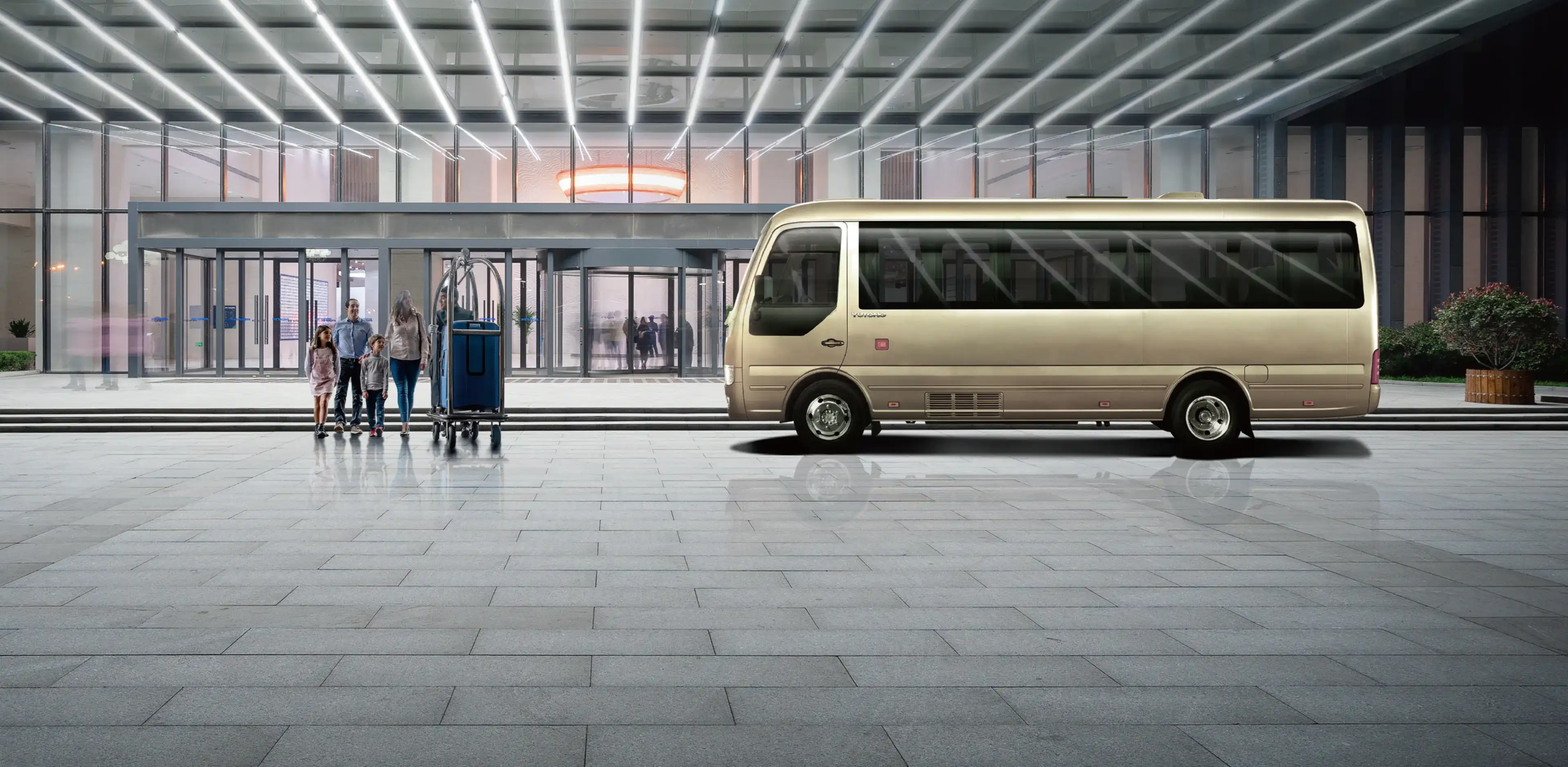
The procurement discussion becomes more specific when fleet planners compare actual models. Yutong Bus offers coaches in different sizes for varied passenger transport needs. Their T7 is listed as a 7-meter vehicle with 17 seats, making it relevant to smaller group movements rather than high-capacity trunk services.
Its electric outward-swing self-suction door has a stated width of 740 mm and closes in 4–4.5 seconds. This detail gives buyers a concrete feature to examine during boarding trials. They should observe clearance, passenger movement, closing behavior, and how the mechanism performs during repeated stops under normal operating conditions.
Fleet operators considering the T7 should still confirm luggage requirements, available configurations, local approvals, and maintenance support. A suitable door mechanism does not settle the full procurement decision. Demand forecasting and route trials remain necessary before assigning a small coach to regular intercity departures.
Supplier Review Should Cover Delivery and Support
When assessing Yutong coaches, procurement teams should request written quotations tied to a specific configuration. The documents should state seating, powertrain, included equipment, warranty scope, delivery terms, and training arrangements. Compare these details line by line rather than relying on similar model names.
Yutong Bus also presents service resources for customers across its international markets. Buyers should confirm which support arrangements apply in their country, including authorized workshops, spare-parts ordering, technical assistance, and response procedures. They should obtain these commitments in writing before signing a fleet agreement.
Acceptance planning should begin before delivery. Establish inspection items for documents, vehicle condition, installed equipment, diagnostic records, and operational demonstrations. Arrange driver familiarization and maintenance handover. Record defects and corrective actions so vehicles enter service with a clear acceptance history.
Turn Procurement Into an Operating Plan
Successful intercity purchasing aligns fleet size, route demand, passenger needs, and support capacity. The chosen vehicle should fit its intended work, while the contract should define exactly what the buyer receives. Small and large coaches may both be useful, but their assignments require different evidence.
Before placing an order, finalize a route-based comparison sheet and request a demonstration under representative conditions. Review full operating costs and local service arrangements together. These steps give fleet managers a sound basis for purchasing and future deployment decisions.