The distance between a house and its outdoor shade area affects circulation, drainage, privacy, and even how comfortable the space feels throughout the day. Patio pergola placement should therefore be considered as part of the property’s overall layout rather than as an isolated decoration. Once the practical requirements are clear, homeowners can create a more useful transition between indoor rooms and the backyard. With extensive experience in outdoor living, SUNJOY offers designs that illustrate how shade structures can be integrated into everyday exterior spaces.
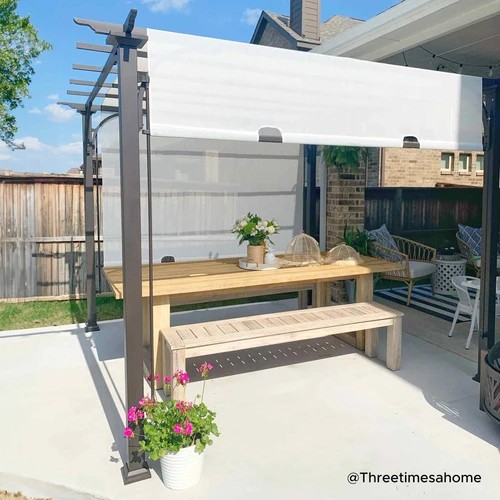
Start With The House Layout
Doors and windows should be mapped before selecting an installation point. A structure positioned directly outside a frequently used doorway may restrict movement, interfere with furniture placement, or reduce access for maintenance. Sliding doors, French doors, kitchen entrances, and basement exits can each require different clearance considerations.
Natural light deserves attention as well. Locating a structure too close to a south- or west-facing window may noticeably change the amount of daylight entering the room behind it. Conversely, placement can provide additional shade during hot afternoon hours, although the effect on interior daylight depends on the structure’s size, height, orientation, and roof configuration.
Roof overhangs create another boundary to consider. Measurements should account for both the building wall and any projections extending beyond it. Checking these dimensions before installation helps prevent posts, beams, or canopy components from conflicting with existing architectural features.
Consider Circulation And Access
People rarely use a backyard structure in isolation. Paths to the garden, pool, garage, grill, or seating area should remain convenient after installation. Leaving a comfortable passage between the house and structure can make the entire yard feel less crowded and reduce awkward detours.
Furniture dimensions can change the amount of usable space considerably. Dining chairs need room to move backward, while lounge seating may require wider circulation around tables. Measuring the intended furniture arrangement before fixing the pergola position gives a much clearer picture of the actual footprint.
Accessibility also extends to maintenance equipment. Lawnmowers, garden carts, trash containers, and other large items may need to pass through the same area. Patio pergola planning becomes more practical when these routine movements are included alongside aesthetic considerations.
Account For Sun, Rain, And Drainage
Sun orientation can determine whether a covered outdoor area feels comfortable at different times of day. Morning shade may be desirable near breakfast seating, whereas afternoon protection can matter more beside a western-facing wall. Seasonal changes should also be considered because the sun’s position shifts throughout the year.
Rainwater needs an equally deliberate route. Runoff from the house roof should not be directed toward the pergola’s posts or into a seating area. Gutters, downspouts, grading, and existing drainage channels may influence how far the structure should sit from the building.
Ground conditions can also affect the appropriate anchoring method and therefore should be checked before installation. Soft soil, concrete slabs, wooden decks, and paver patios each present different anchoring considerations. Manufacturer instructions should be consulted before installation because mounting methods may vary according to the supporting surface.
Match Size With The Available Space
Compact yards benefit from careful proportion rather than simply choosing the smallest available model. Best pergola decisions should reflect usable floor area, furniture requirements, circulation, and the visual relationship between the structure and house.
One current SUNJOY model illustrates how these elements can be combined within a moderate footprint, with dimensions and structural details designed to match the scale of typical residential backyards.
Large yards introduce a different challenge because generous spacing can make an undersized structure appear disconnected from the house. Conversely, excessive scale may overwhelm a narrow patio or obstruct established views. Proportion, rather than square footage alone, should guide the final selection.
Think Beyond The Initial Installation
Future landscaping can alter the practical distance between the house and structure. Trees may mature, garden beds may expand, and outdoor kitchens or fire features could be added later. Keeping some flexibility around the installation area can make future improvements easier to accommodate.
Privacy is another long-term consideration. Neighboring properties, upper-story windows, and street-facing views may influence whether the structure should sit closer to the house or farther into the yard. Screens, curtains, plants, and other visual barriers can change privacy without requiring the entire structure to be relocated.
Maintenance access should remain available after everything is installed. Roofs, canopies, fasteners, drainage areas, and surrounding landscaping all require occasional attention. A best pergola choice ultimately depends not only on how the structure looks on installation day, but also on whether the surrounding space remains practical afterward.
Conclusion
Good placement begins with the relationship between the building, the yard, and the activities expected to happen there. Door clearance, sunlight, drainage, circulation, furniture dimensions, and future landscaping each contribute something different to the decision. Those factors can turn an ordinary backyard layout into a more coherent outdoor living area without relying on unnecessary additions.
Selecting the right patio pergola also means considering how its dimensions interact with the existing architecture. Smaller footprints may suit compact patios, while larger designs can define spacious entertaining zones. For homeowners comparing the best pergola options, SUNJOY‘s range demonstrates how adjustable shade, structural details, and varied dimensions can support different backyard layouts.