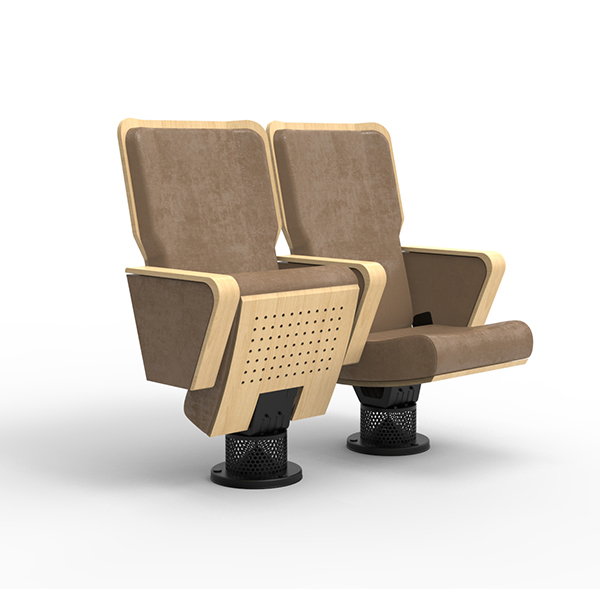
Rocking mechanisms change the spectator experience by adding controlled movement to a seated performance environment. For commercial theater chairs, the mechanism should not feel like a novelty; it should reduce stiffness and help viewers stay comfortable through long films, concerts, or presentations. Space-saving rockers can support high-capacity halls when comfort features must not reduce seat count too much. This is useful for commercial venues, school auditoriums, and overseas agents who need practical comfort without weakening venue discipline. The mechanism should therefore be specified with restraint, so movement supports rest without distracting nearby spectators.
Movement That Relieves Passive Sitting
A well-designed rocker supports small body adjustments. Viewers can shift posture slightly, ease pressure on the lower back, and remain engaged without standing or disturbing the row. For commercial theater chairs with rocking mechanisms, buyers should evaluate movement range, return control, row spacing, and noise performance rather than appearance alone. Operators should confirm that the rocking range remains consistent after heavy use and that the mechanism does not create noise during quiet scenes or live performances. A Leadcom Seating rocker specification should therefore be judged by quiet return, stable movement, and service access as much as by first-sit comfort. In large cinema groups, the same detail also affects cleaning, safety, and repeat use.
Comfort Without Losing Venue Control
The correct venue type also matters. Space-saving rockers may suit high-capacity halls where operators still need efficient seat counts, while luxury recliners may serve boutique VIP concepts with fewer seats and higher comfort expectations. Government cultural projects, commercial cinemas, and education performance rooms will not define value in the same way. A theatre seating supplier should help clients compare rocking chairs with fixed seats, fold-up models, and recliner formats. The broader comparison keeps the project from treating one comfort feature as the only solution. This keeps the selection practical for operators who must balance comfort, capacity, and future repair access.
Where Rockers Fit Best
Procurement teams should ask whether the mechanism improves experience without increasing maintenance risk. Hardware strength, cleaning clearance, replacement access, and user safety must be part of the review. For overseas agents, a clear explanation helps local operators choose commercial theater chairs that match their audience and ticket model. Custom options and correct theatre seating dimensions matter because the rocker must fit the room as well as the spectator. The best result is comfort that feels natural, not excessive, while the venue keeps the discipline expected in a formal performance space. A controlled mechanism also helps staff explain the seat clearly to guests and maintenance teams. For Leadcom Seating projects, this makes the rocker part of the venue’s operating plan rather than a separate comfort feature.